Heat pumps work best when they can heat a home using low flow temperatures. In simple terms, the lower the water temperature needed by the heating system, the less effort and energy the heat pump has to use.
That makes the choice of heat emitter very important.
A heat emitter is the part of the system that transfers heat into the room. Common examples include radiators, underfloor heating, heated skirting boards, forced ducted heating and many others to name a few. The best emitter for a heat pump is usually one that can deliver enough energy at the lowest practical water temperature.
Why heat emitters matter with heat pumps
A gas boiler can produce high-temperature water quickly. Heat pumps work differently. They are most efficient when they run steadily, at lower water temperatures, without stop-start cycling.
If the heat emitters are too small, the heat pump may need to increase its flow temperature to keep the home comfortable and warm. This can reduce efficiency.
A well-designed heat pump system should therefore focus on:
- low flow temperatures
- steady operation
- good room-by-room control
- adequate emitter surface area
- sensible zoning
- avoiding unnecessary cycling and short-cycling
The right emitters help the heat pump stay in its most efficient operating range.
Standard, existing radiators with heat pumps
Standard radiators can work with heat pumps, but there is an important limitation.
Many existing radiators were originally sized for boilers, which often run at higher water temperatures than heat pumps. If those radiators are too small, they may not deliver enough heat at lower flow temperatures.
In that case, the heat pump may need to run hotter to compensate. This can reduce its coefficient of performance, or COP, because the compressor has to work harder.
Standard radiators may be suitable where the home is well insulated, the heat demand is low, or the radiators already have enough output at lower temperatures. But in many retrofit situations, they need careful checking.
Best for: homes where existing radiators are already large enough for low-temperature heating.
Main limitation: may require higher flow temperatures if undersized or made from an inappropriate material, such as traditional cast iron.
Oversized radiators with heat pumps
Oversized radiators are radiators with a larger heat output than standard-sized emitters. This extra surface area allows them to heat a room using lower water temperatures depending on the room’s heat losses.
That makes them more suitable and a good consideration for heat pumps.
By increasing emitter size, the system can often maintain comfort without pushing the heat pump to higher flow temperatures. This supports better efficiency and steadier operation.
However, oversized radiators still take up wall space and may not suit every room layout. In some homes, larger radiators can also affect furniture placement or restrict interior design possibilities.
They can be a practical retrofit option, but they do not offer the same even heat distribution as underfloor heating.
Best for: retrofit projects where underfloor heating is not being installed.
Main limitation: larger wall-mounted units may be needed to achieve low-temperature performance.

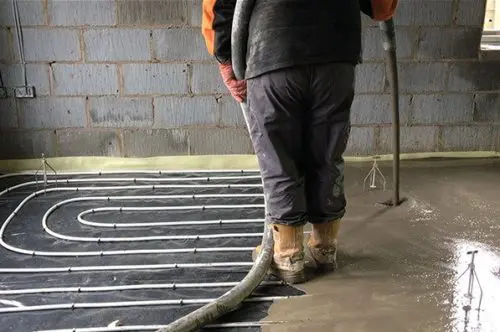
Screed underfloor heating with heat pumps
Screed underfloor heating can work very well with heat pumps because it uses a large floor area to emit heat. This allows the system to run at low water temperatures, which is good for heat pump efficiency.
The main drawback is slow response time,
Traditional screed underfloor heating has high thermal mass. The pipes heat the screed first, and the screed then releases heat into the room. This can create comfortable, steady warmth, but it can also take hours to warm up and cool down.
Because of this slow response, screed systems are often run continuously at a low level. This can suit homes with steady heating patterns, but it may be less flexible for households that want different rooms heated at different times.
For example, if you only want a bathroom warm before a morning shower, or a home office heated during working hours, a slow screed system may need a long preheat period.
Best for: homes with consistent heating schedules and where slow, steady warmth is acceptable.
Main limitation: Long to heat up and cool down, which can result in wasted energy if the user needs to open windows to cool down spaces. slower response and less flexible with quick changes to temperature, requiring careful scheduling.
Modern overlay underfloor heating with heat pumps
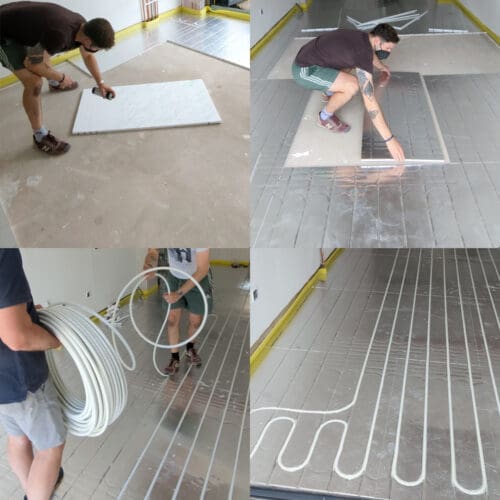
Overlay underfloor heating is designed to sit above the existing floor structure rather than being buried in a thick screed slab.
A low thermal mass overlay system, such as the Wunda Rapid Response® system, is designed to transfer heat into the room more quickly. Instead of heating a heavy slab first, it reduces the amount of material and mass that needs to be warmed before the room feels comfortable.
This gives overlay underfloor heating two key advantages for heat pumps:
First, it can support low flow temperatures, helping the heat pump operate efficiently.
Second, it can respond more quickly than traditional screed underfloor heating, making room-by-room zoning and smart scheduling more practical.
That means living rooms, bedrooms, bathrooms, home offices and spare rooms can be heated according to how they are actually used, rather than treating the whole home as one single zone.
This is especially useful in modern homes where different spaces have different comfort needs at different times of day.
Best for: low-temperature heat pump systems where comfort, zoning and faster response matter.
Main limitation: requires a suitable floor build-up and correct system design.
Which heat emitter is best for a heat pump?
The best heat emitter is the one that can keep the home comfortable while allowing the heat pump to run at the lowest practical flow temperature.
For many homes, that means increasing emitter surface area.
Radiators can work, especially if they are large enough. Oversized radiators are often a practical improvement for heat pump retrofits. Screed underfloor heating offers low-temperature performance but can feel slow. Overlay underfloor heating offers low-temperature performance with faster response and better flexibility.
Final takeaway
Heat pumps are most efficient when they run steadily at low flow temperatures. The heat emitter should help them do that, not force them to work harder.
Standard radiators may work if they are already large enough. Oversized radiators can improve low-temperature performance. Screed underfloor heating offers steady warmth but slower response. Overlay underfloor heating such as the Wundafloor Rapid Response® system combines low-temperature operation with faster room-by-room control.
For homes that need comfort, efficiency and flexibility, Wunda Rapid Response® overlay underfloor heating is often one of the strongest heat emitter options for a heat pump.